Goods transport

Goods transport

Our VERSYS system offers a solution to the problem of vehicle routing

Goods transport

Vehicle routing problems

The VERSYS system presented hereunder gives solution for a well-known business optimization problem called vehicle routing and scheduling problem. It is a frequent terminological misconception that vehicle routing is the definition of the shortest or the fastest route to visit a cluster of destinations. This is the route-planning problem, which has good and wide-range software-assistance by the gaining up on digital maps. The vehicle routing and scheduling problem considerably transcends route-planning in its complexity: it assigns the amounts of costumers’ orders optimally to available vehicles of a fleet - consisting of different types of vehicles – with consideration given to capacity limits, and other delivery-service restrictions.

The concventional methods of vehicle routing and schedling

The daily operative delivery scheduling is commonly generated by using one of the two methods mentioned hereunder:

Fixed-route scheduling

Vehicles take routes and visit costumers according to the same weekly or fortnightly schedule, customers can order only for a given delivery day. Only one thing comes up to compass as a daily routine: the route-planning of tours sorted automatically by the incoming daily orders. The main disadvantage of fixed-route scheduling is that it ignores the geographical distribution of daily orders, so it can lead to serious loss of efficiency. For example: at days of low order volume every vehicle departs in spite of their low capacity utilization. On the other hand when demand is high in some regions many of the vehicles may get overloaded and unable to deliver to each costumer in time so other vehicles have to take over deliveries from problematic territories. Companies using fixed-routes generally oversize their fleet in order to service their clients fully. This method could be problematic as regards its business aspects because it narrows costumers’ ordering days. Further difficulties may arise if their customers often change (taking new clients into tours, passing over lost clients).

Manual scheduling

Daily tour plans made manually using different rules of thumb or a simple route-planning software application.

Manual scheduling has many hindrances:

    • limited information about the road-network of territories (length of road-sections, quality of the affected roads, traffic restrictions and blocks, etc.);
    • assignments must be done among different vehicle types (the whole fleet must be optimum planned, and not just each tour!);
    • time aspects must also be viewed besides spatial aspects (opening/business hours, loading times, drivers’ work hours, etc.).

In case of an extensive delivery operation the above facts go beyond control and hand made plans get farther from the optimum.

These details support the fact that fixed-route scheduling and manual scheduling result in serious inefficiency. Unexploited delivery capacities, excess driven distances, maintenance of an oversized fleet mean concrete expenses.

Appliance of software aided vehicle routing and scheduling optimization

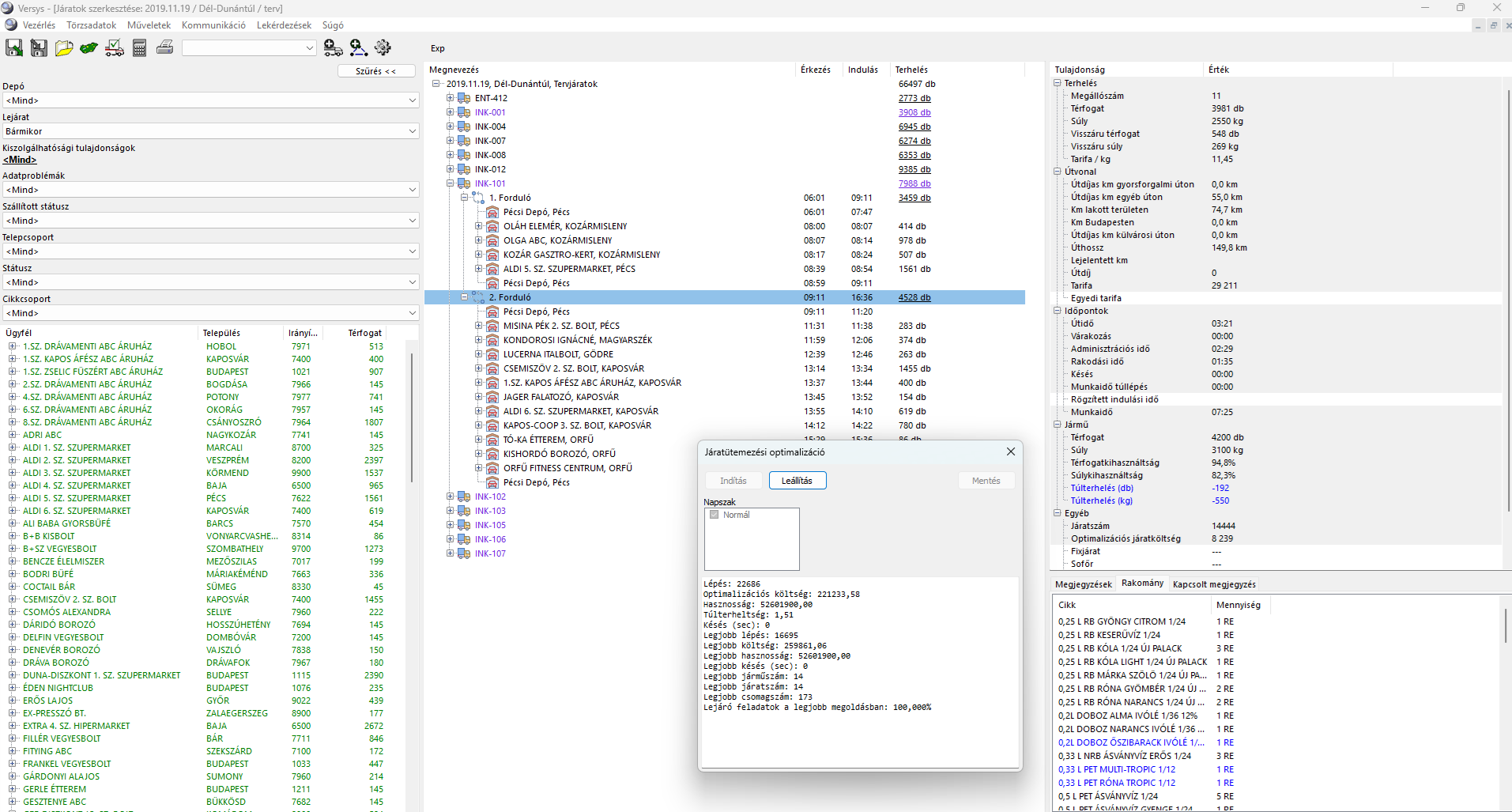
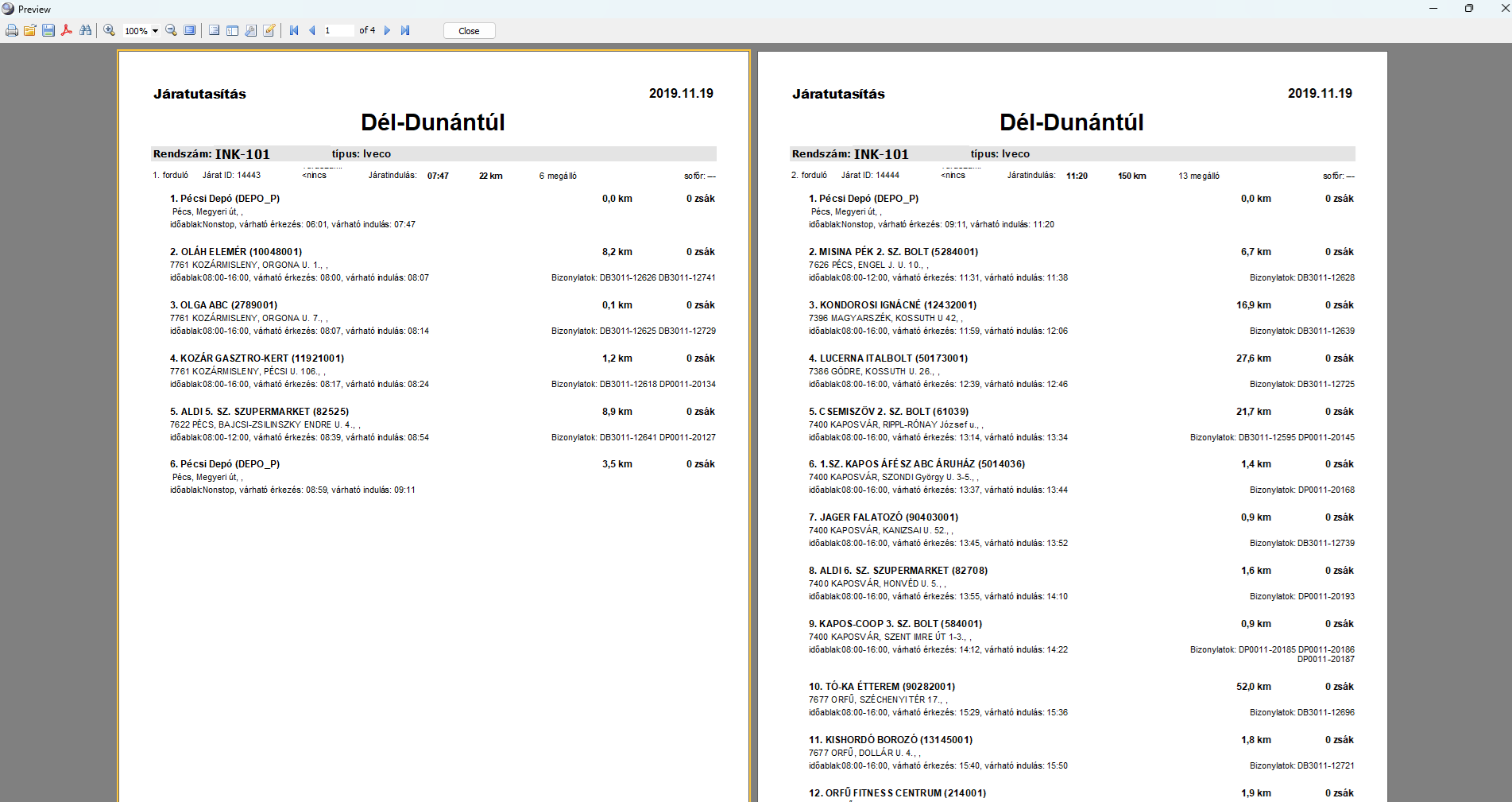
Delivery plans offered by VERSYS are adjusting to the geographical distribution of daily orders. The generated delivery plan provides data in the fullest detail. It contains:

  • which vehicles must take part in daily tasks,
  • how many tours a vehicle must take,
  • which destinations the vehicle must visit and in what sequence,
  • what goods must be loaded and unloaded at a destination.

The system is able to handle many essential restrictions. In practice the large number of restrictions is the one most important hindrance to manual planning of extensive assignments. However, the vehicle routing and scheduling algorithm stands for cutting traveled distances and direct delivery costs while strictly adhering to the given restrictions.VERSYS was tested with examples from many different business sectors. The surveys we conducted show similar benefits which can be found in the international literature. The test problems show that the direct transport costs can be reduced by 5-30 % compared to manual or fixed-route scheduling.

According to the most commonly used indicators using VERSYS

  • deliveries can be realizable with 10-20 % fewer vehicles,
  • routes are 5-30 % shorter,
  • number of routes are 5-15 % less,
  • utilization of vehicles are 7-15 % better.

Other benefits of using VERSYS

  • less delay,
  • using of preferred vehicles,
  • compliance with capacity constraints,
  • improving customers’ satisfaction through raising the level of service,
  • more efficient use of human resources by the reduction of transport manager’s operative tasks,
  • extension of managerial control over the drivers and hauliers,
  • wide range of analytical capabilities to support short- and long-term logistic decisions,
  • simulation options (e.g. what if we change the structure of fleet or if we relocate the depots, etc.)

The more detailed product description of VERSYS can be downloaded from the Downloads menu.

Downloads

The vehicle routing optimization services of VERSYS system

The essential goal of VERSYS is to assign a detailed daily delivery plan using the right input (goods, partners, vehicles, orders), taking into consideration all the given limits and restrictions.

Main features of the routing and scheduling algorithm:

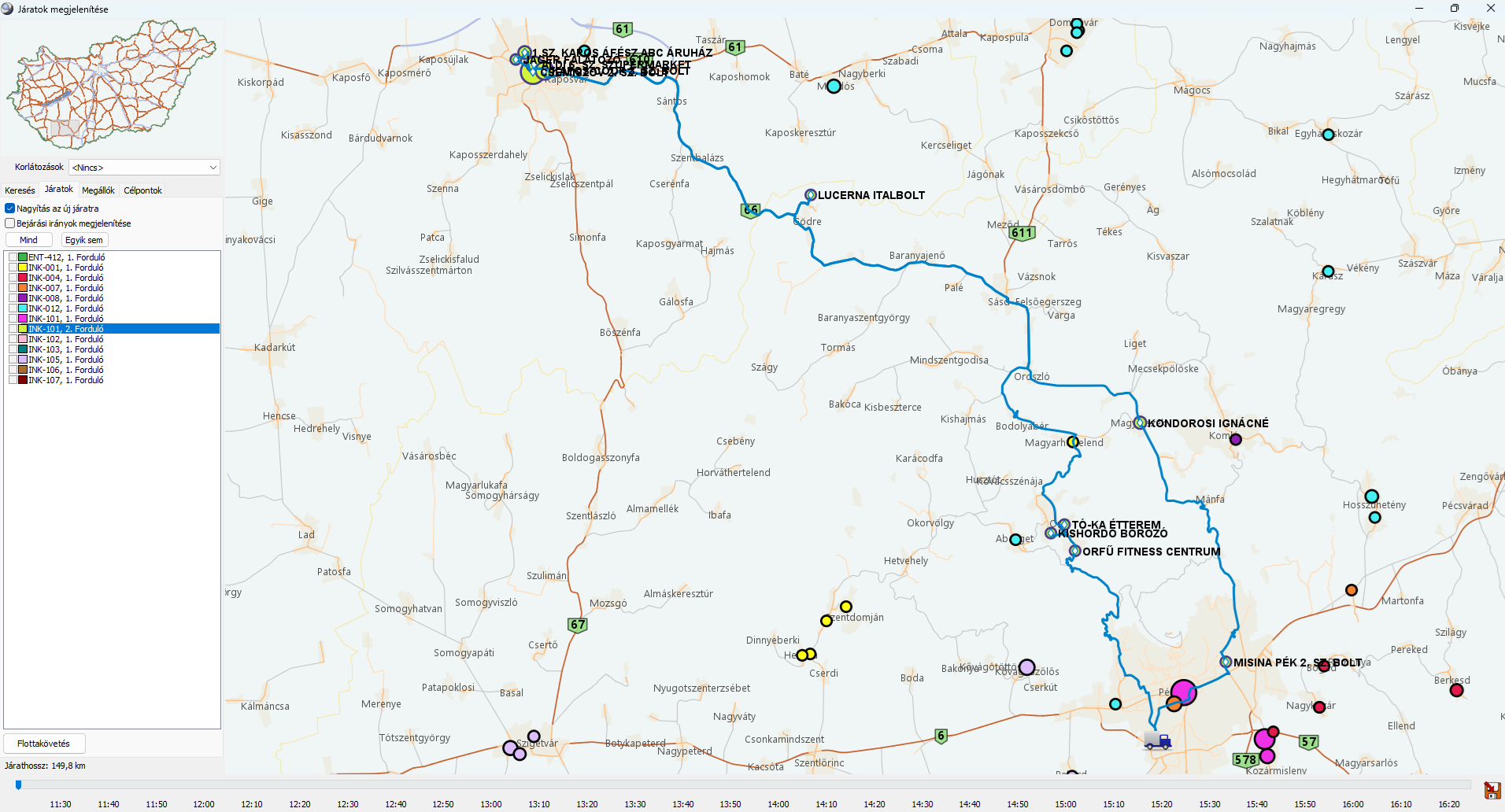
  • finds optimum routes on Hungary’s detailed digital road-map (also foreign transport tasks can be planned by fitting the appropriate digital map); route searching is customized for the given vehicle: weight and height road restrictions and road type preferences are considered
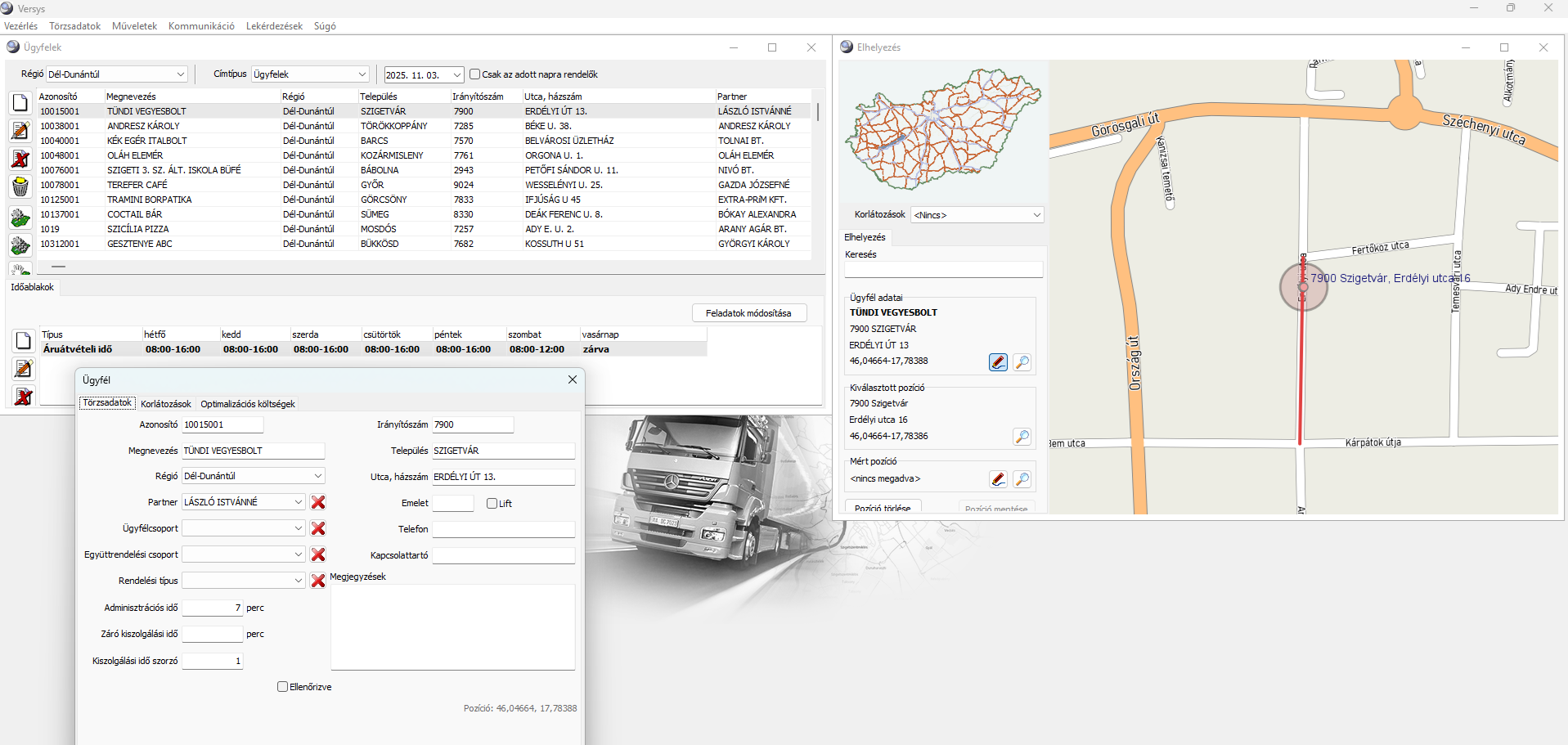
  • flexible insertion of partners and depots into the road-map, automatic location by addresses / GPS-coordinate
  • user forbiddance of arbitrary road-sections
  • considers partners’ opening hours and dinner-hours
  • considers work time of drivers
  • considers a two-component serving time: the administration component is characteristic of a given client, the loading component is in proportion with the delivered quantities
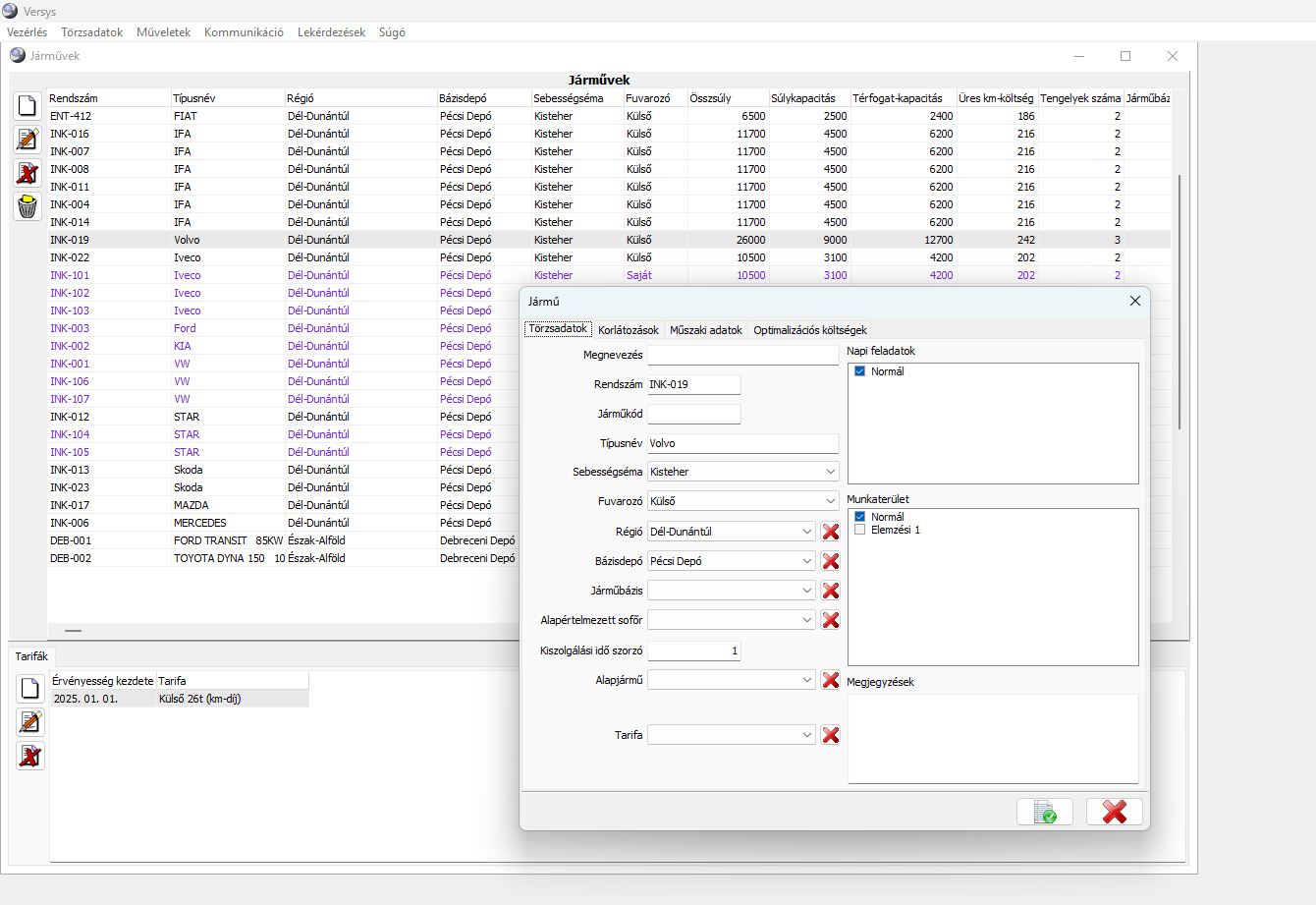
  • free definition of partners’ service requirements toward vehicles
  • free definition of goods’ requirements toward vehicles
  • considers average speed of vehicles given by a road-type
  • considers the location of vehicle’s garage
  • considers road-type preferences of vehicles
  • takes into account the transport capacity (weight and volume) of vehicles, soft capacity limits can be applied in order to create more efficient routes
  • takes into account the average direct cost of vehicles per kilometer (the algorithm does not aim to minimise the total distance travelled by the fleet, but to reduce the fleet's operating costs)
  • flexible handling of trailers
  • handles orders with a service interval of several days (in case of free capacities these orders can be executed before closing date) creation of territories by assigning vehicles and partners to a depot
  • ability to serve a territory from multiple depots
  • ability to reload vehicles from foreign (not the starting) depots
  • ability to forbid vehicles for a given day
  • handles cargo of bulk goods
  • considers the cost of changing bulk goods (when delivering different bulk goods with the same vehicle)
  • handles more routes for a vehicle in a day
  • optimization of fixed-routes (considering the reference period, district, seasonality, variability of ordered quantites)
  • generating daily routes on the basis of fixed-routes
  • simulations for the optimal structure of the fleet
  • examination of profitability to serve the given customers
  • handles transactions of delivery, freight-exchange and reconsignment

Additional features of VERSYS system

In addition to the automatic generation of efficient transport plans, the VERSYS system provides extensive support for the entire range of transport management activities:

  • Manual route planning
  • Dynamic optimization options
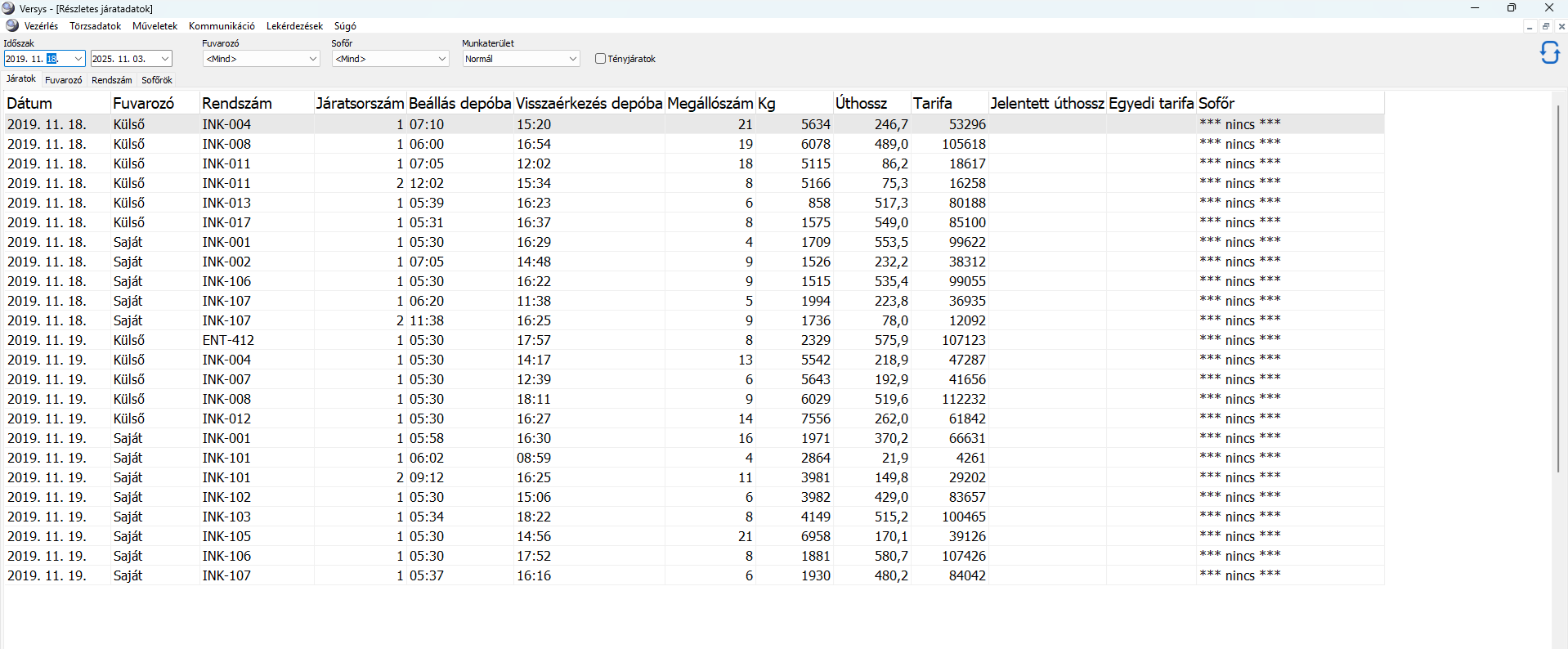
  • Recording of realized routes
  • GPS-based route tracking
  • Cyclical scheduling of visits

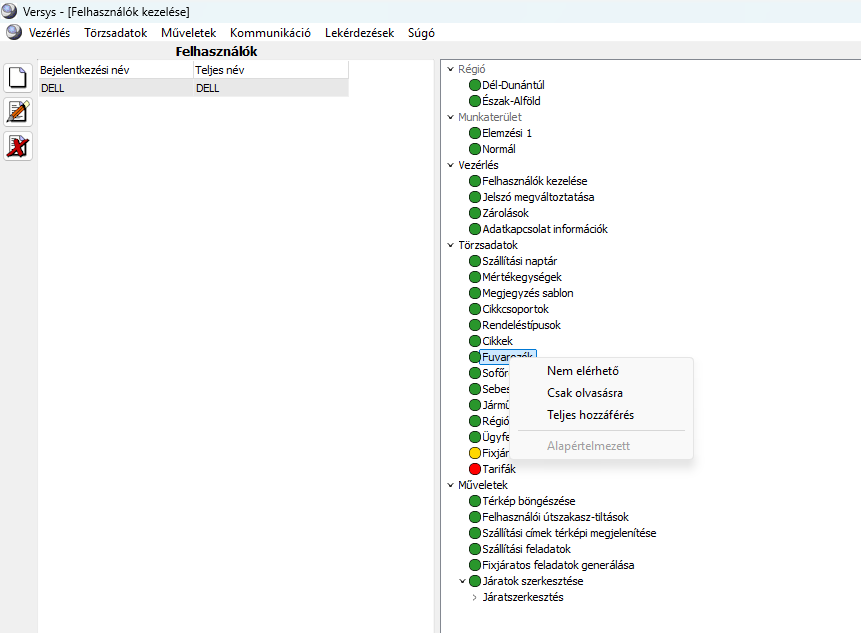
The application works in a modern Windows environment, its resource requirements do not exceed those of the operating system. A SQL-based database manager is respponsible for storing the data. Multi-user, client-server mode is also possible. If some or all of the basic data is already available in external systems, we can provide the import functions. Queries to ensure systematic access to the data recorded using the system will be created according to user requirements.

During the developing of the system, we have tried to make the optimisation task as general as possible. Of course, it is possible that for some reason the specification presented does not fully meet the scheduling problems of a given transport function. In this case, we are fully open to any extension or customisation improvements.